La Caleta de Punta Prieta: Beach, Seawater Pool and Visiting Guide
La Caleta de Punta Prieta is a small coastal settlement in Güímar, where houses cluster above a dark-pebble cove and the Atlantic washes against volcanic rock. Come for a short waterfront stroll, a swim when conditions allow, or a leisurely meal beside the sea. Its appeal lies in the compact village setting and everyday relationship with the ocean.
In this guide
Where is La Caleta de Punta Prieta?
La Caleta lies on Tenerife’s eastern coast, in the municipality of Güímar, south of Puertito de Güímar and close to Punta Prieta. The TF-1 motorway passes nearby, while the settlement itself occupies the narrow coastal strip below it. Search for “La Caleta, Güímar” or “La Caleta de Punta Prieta” when planning your journey.
The location matters because Tenerife has several places called La Caleta. This is a different destination from La Caleta in Adeje and La Caleta de Interián on the northwest coast. Likewise, La Caleta and neighbouring Punta Prieta have separate bathing spots: photographs and directions for one pool should not automatically be applied to the other.
Allow around an hour to look around without swimming or eating. A longer stay makes sense on a calm day, particularly if you enjoy small coastal neighbourhoods, volcanic shores and watching village life unfold around a bathing cove.
The beach and village bathing cove
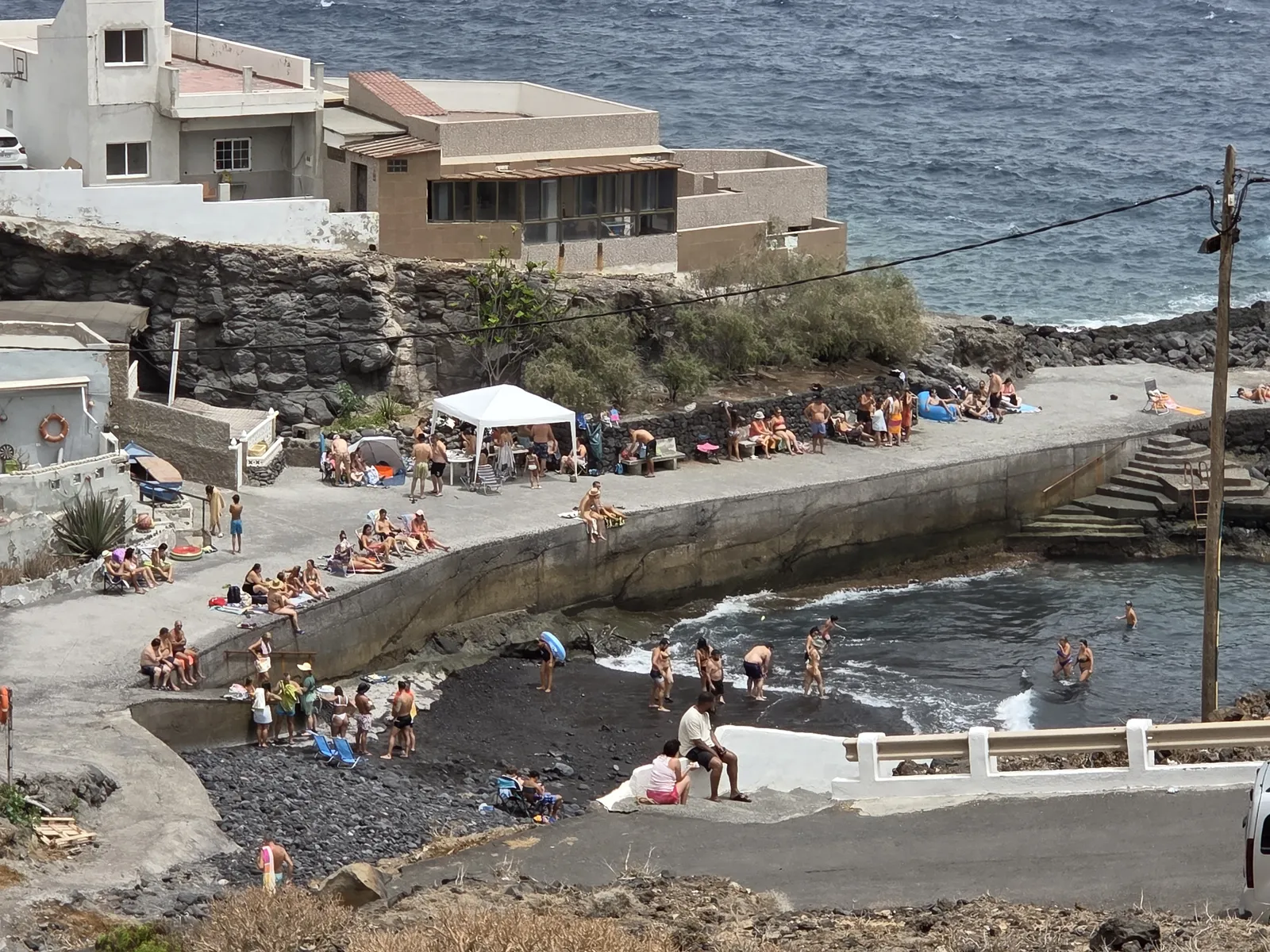
La Caleta’s beach is a compact inlet with dark pebbles and patches of darker fine material, bordered by houses, retaining walls and concrete platforms. It is a place to sit close to the water, take a dip and enjoy the seafront atmosphere. The limited beach area means that much of the space used for relaxing lies on the surrounding hard surfaces.
Entry varies around the cove. The pebbly shoreline provides one approach, while steps descend towards the water elsewhere. Choose an entry where you can also get out comfortably, taking account of waves and slippery surfaces. Water shoes are useful on the stones, although they do not remove the need for careful footing.
The inlet offers some shelter, but it remains connected to the open Atlantic. Watch several sets of waves before deciding to swim. For families, the short distance between the village and water is convenient, but children need close supervision around the platform edges, steps and changing water depth.
La Caleta’s seawater pool
Another attraction is the small seawater pool set among volcanic rocks. Often described as a natural pool or charco, it incorporates constructed walls and access features into the rocky shoreline. This combination of lava, concrete and seawater is characteristic of several neighbourhood bathing places along Güímar’s coast.
The pool offers a different experience from the village beach: a contained bathing area surrounded by rough rock, with the open sea immediately beyond. Its suitability changes with the swell, water level and condition of the access. A wall can reduce ordinary wave movement without making a pool safe during rough seas.
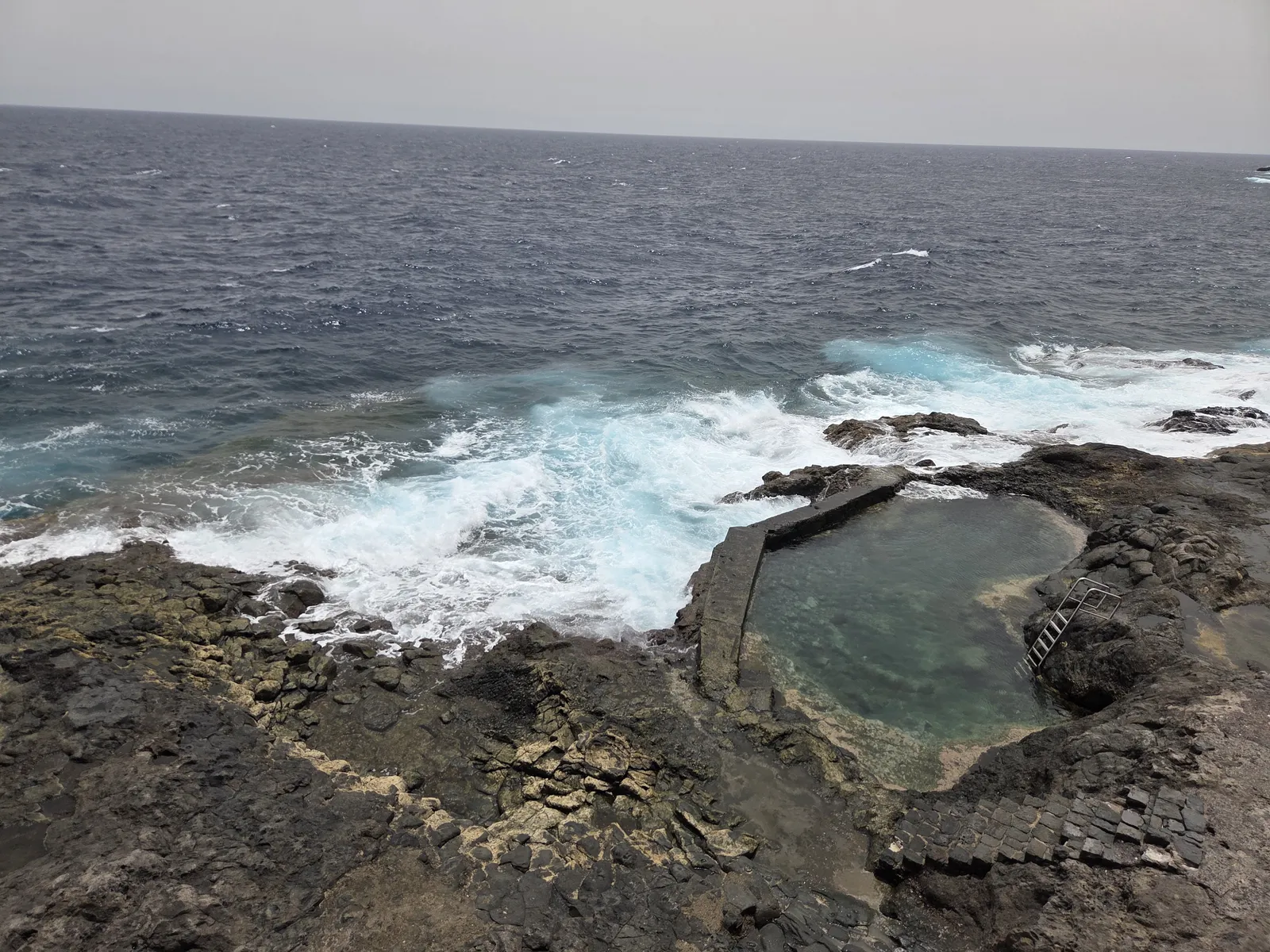
Use the established access and check the steps or ladder before entering. Avoid swimming when waves wash across the perimeter, and keep away from exposed outer rocks. There is no single tide recommendation that overrides the conditions you find on arrival. Nearby Punta Prieta has its own pool, so check the location carefully if you intend to visit both.
Exploring the village and finding somewhere to eat
A short walk through La Caleta reveals closely spaced houses, sloping streets and glimpses of the sea between buildings. Follow public streets down towards the bathing area, then take time to appreciate the waterfront. Distances are modest, but gradients and changes of level make the experience different from walking along a broad, level promenade.
This is a residential neighbourhood. Keep doorways and steps clear, avoid leaving belongings across narrow passages and be considerate when photographing occupied homes. The shoreline is the main attraction; there is no need to turn the visit into a lengthy sightseeing circuit.
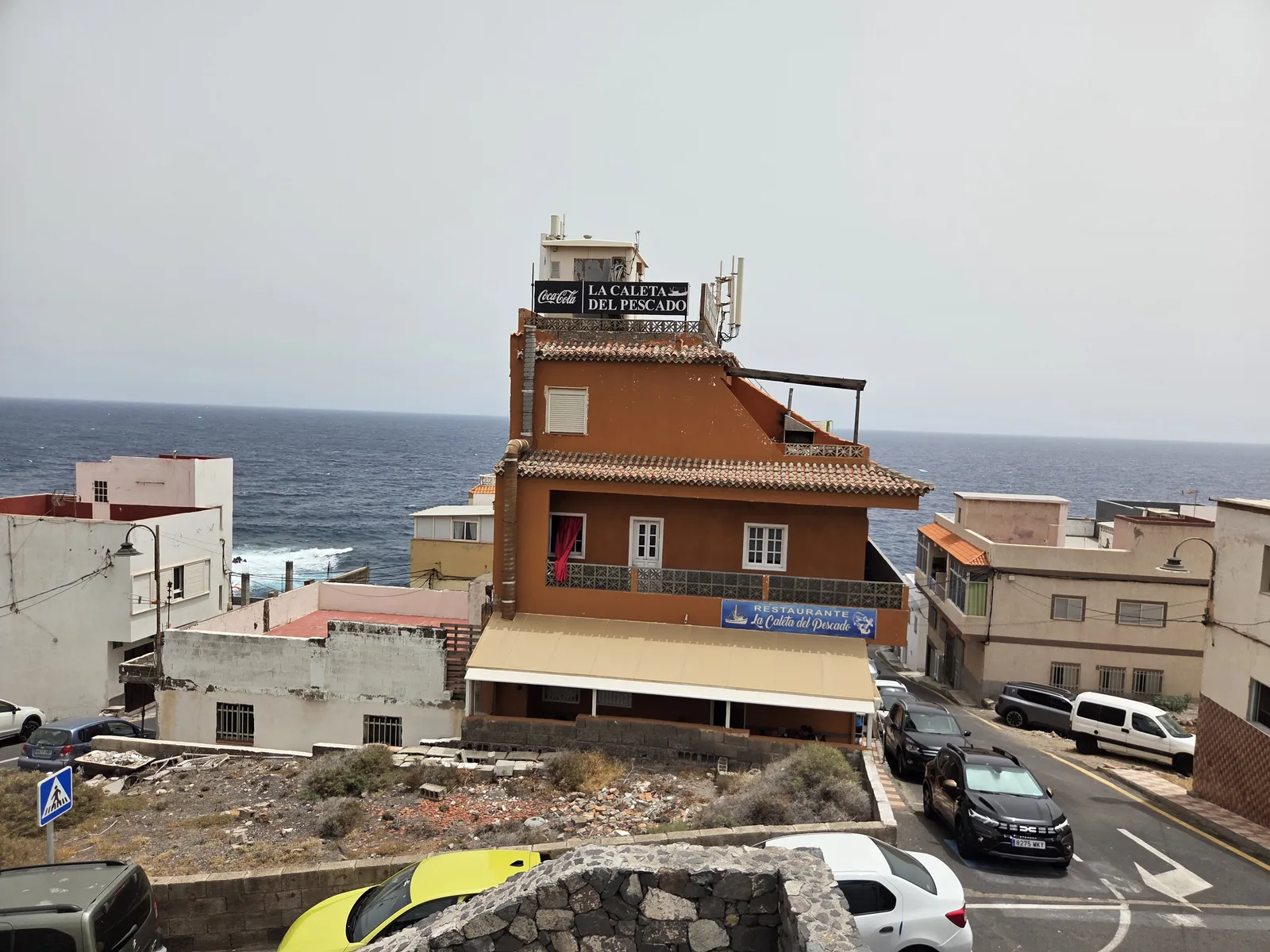
Restaurante La Caleta del Pescado is a recognisable landmark, with its name displayed prominently above the building. It appears in the municipal restaurant directory. Check opening arrangements and availability directly before making lunch the centrepiece of your visit, especially if travelling specifically to eat there.
Getting to La Caleta and finding parking
By car
Approach via the TF-1 and follow local directions towards Punta Prieta and La Caleta. Set your destination before leaving the motorway so that navigation leads to the correct settlement. The final streets are narrow in places and include slopes and one-way sections; follow the signs rather than attempting the shortest apparent route.
Use permitted parking spaces and finish on foot. Avoid blocking garage doors, turning areas or access to the waterfront. Arriving earlier gives you more flexibility on popular bathing days. Anyone with limited mobility should assess the final approach separately: reaching the village by car does not establish step-free access to the beach or pool.
By bus
TITSA lists Punta Prieta stops served by routes including 111 and 114. Check the official TITSA journey planner for your departure point, direction and return service. The stops are separate from the waterfront, so examine the pedestrian approach as well as the bus timetable. Use designated crossings and underpasses around the motorway junction.
When to visit and how to plan your time
Choose a day with light wind and manageable swell if swimming is your priority. Morning is a pleasant time for exploring before the strongest heat. Bring drinking water, sun protection, a towel and footwear suitable for both village streets and the shoreline. Plan around limited services rather than assuming beach equipment, changing facilities or lifeguard cover.
For a relaxed visit, walk through the village, inspect the cove and pool, then choose where to settle according to conditions. Allow two to three hours with a swim, or longer with lunch. Check AEMET’s marine forecast and respect any notices at the bathing areas.
Puertito de Güímar makes a practical second stop for a longer waterfront walk and a wider choice of places to eat. The Malpaís de Güímar, beside Puertito, suits a separate walking outing with suitable shoes and water. Keep La Caleta itself unhurried: its cove, rocky pool and compact streets are enough for a satisfying coastal stop.