Las Breñas Beach: Black Sand and Views of the Roques de Anaga
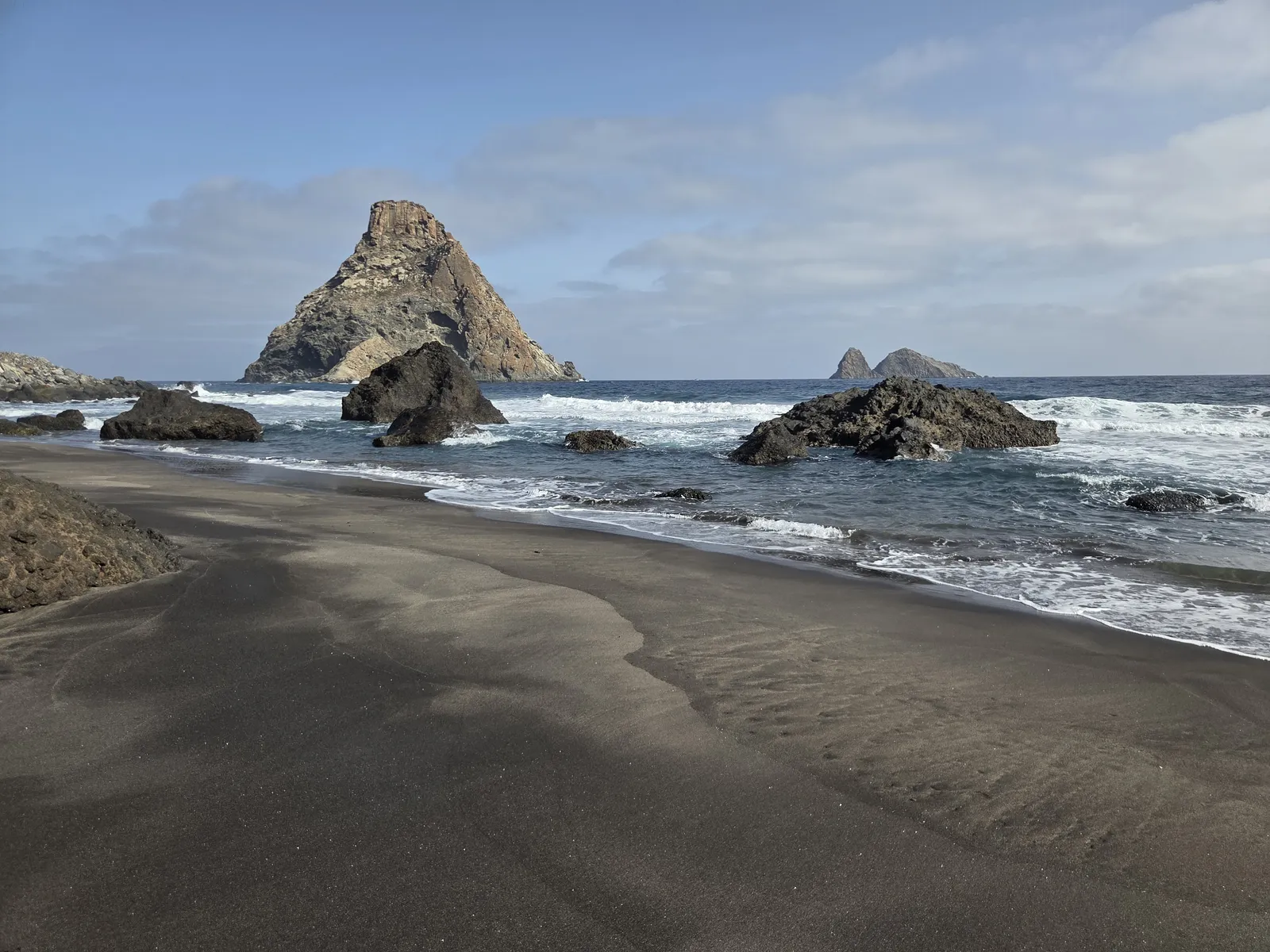
Playa de Las Breñas lies on Tenerife’s remote northeastern coast, where dark volcanic sand, scattered boulders and the Roques de Anaga create a remarkable seascape. Reaching it involves a proper coastal walk and a rough final descent, making it a destination for prepared hikers who enjoy wild shores and have time for the return journey.
In this guide
Where is Las Breñas Beach?
Las Breñas Beach is in the Anaga massif, within the municipality of Santa Cruz de Tenerife. It lies on the northern coastline near Las Palmas de Anaga, along the wider walking corridor connecting El Draguillo with the northeastern tip of the island. There is no road running down to the beach.
The name can cause confusion when planning a journey: the Mirador de Las Breñas and its descending path in El Sauzal belong to a different part of Tenerife. For this beach, look for Las Palmas de Anaga, El Draguillo and the Roques de Anaga when checking your map.
The attraction is the combination of sea and mountain scenery. Walking here reveals steep slopes, old cultivated terraces and isolated rural buildings before the shoreline comes into view. The journey deserves as much attention as the beach itself.
What the beach is like
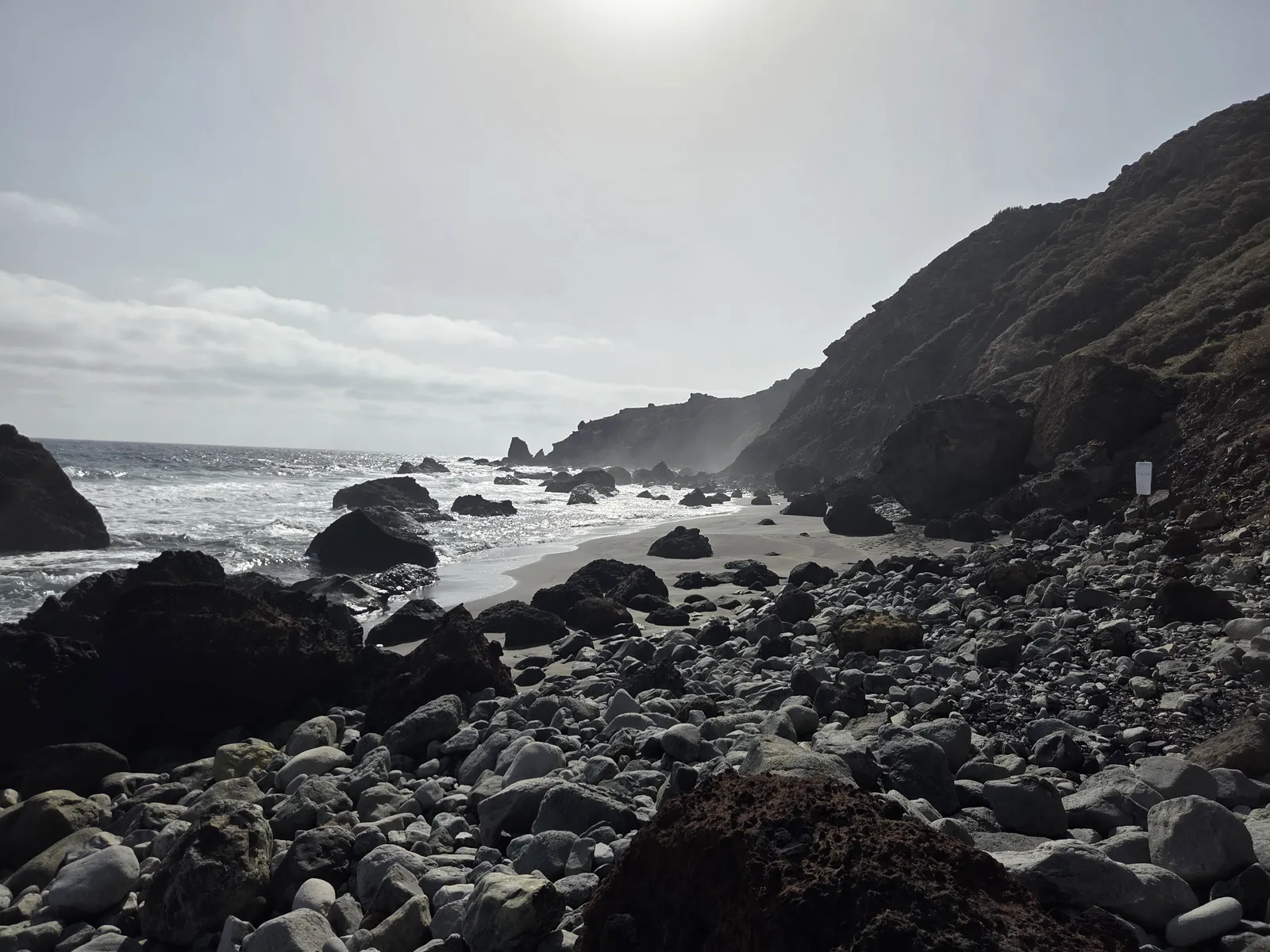
Expect a natural shore with dark sand, rounded stones and large volcanic boulders. The amount of exposed sand varies with tides and wave action, so photographs showing a generous sandy strip do not guarantee the same conditions on another visit. Some stretches are much rockier than others.
The Roques de Anaga dominate the view out to sea. From the beach, their sharply defined silhouettes contrast with the lower rocks scattered through the surf. This makes Las Breñas especially rewarding for landscape photography, although sea spray, strong light and moving water require care when choosing a position.
Plan for a beach without visitor facilities: bring drinking water, food and everything needed for the walk back. Do not rely on finding toilets, showers, refreshments or supervised bathing. The rough approach also makes it unsuitable for wheelchairs and pushchairs, and a poor choice for a straightforward family beach day.
Walking to Las Breñas Beach
The approach through El Draguillo and Las Palmas
A commonly recorded approach starts at El Draguillo and follows the coastal direction towards Las Palmas de Anaga before descending to Las Breñas. This is an undulating mountain path, with climbs on the outward journey as well as on the return. Reaching sea level does not mean the walk has been mostly downhill.
Published walking records include an itinerary of approximately four kilometres each way from El Draguillo. Treat that as orientation rather than a guaranteed route measurement: your starting point, the precise descent and any access changes affect the total. Allow several hours for the return outing, with additional time if walking from Benijo.
Las Palmas adds interest through its agricultural setting and traditional buildings. Respect homes, cultivated ground and property boundaries; the presence of a walking route does not make buildings or terraces open to visitors.
The final descent and longer alternatives
The final approach to the shore requires particular judgement because loose stones and uneven ground can make footing awkward. A marked regional trail nearby should not be taken as proof that every beach spur is maintained or straightforward. If the descent is unclear, damaged or beyond your confidence, enjoy the coastal views and return.
Chamorga, Faro de Anaga and Roque Bermejo belong to the wider trail network, but including them creates a substantially more demanding itinerary. Check the exact route and current notices through Tenerife ON. Follow posted restrictions and use an offline map alongside on-site signs.
Swimming, waves and shoreline safety
Las Breñas faces the open Atlantic. Breaking waves, currents and submerged rocks make it a poor destination if swimming is the main purpose of your trip. A quieter interval between waves does not establish safe conditions, and low tide alone does not remove the risks.
Enjoy the beach from dry ground, keeping enough distance from the wash to account for larger sets. Avoid standing on wet shoreline boulders for photographs or entering gaps between rocks where waves can push you off balance. Choose a stopping place with a clear retreat inland rather than one reached by crossing wave-washed ground.
Rocky hollows should not be assumed to offer protected natural pools. With children, inexperienced walkers or anyone seeking an easy swim, choose a beach with a manageable approach and appropriate bathing supervision instead. Las Breñas is best appreciated as a coastal hiking destination.
Getting there: roads, parking and buses
For the western approach, drive towards Taganana, Almáciga and Benijo. The roads are winding, and parking around the small coastal settlements is limited. Use lawful spaces without blocking access, and do not assume the track towards El Draguillo provides unrestricted visitor driving or parking.
TITSA route 946 connects Santa Cruz with the Taganana–Almáciga area. It does not deliver you to Las Breñas: reaching the coastal approach involves additional walking. Check current stops, connections and return departures before committing to the outing.
Route 947 serves Chamorga, a different trail starting point. Avoid combining the two approaches without calculating the full walking distance, elevation changes and bus timings. Missing a return service here can be difficult to resolve.
When to visit and how to plan the day
Choose a day with moderate temperatures, good visibility and no relevant weather warnings. Rain can worsen footing, while hot weather makes the exposed climbs harder. Check the forecast through AEMET, together with trail notices, before leaving.
Wear hiking footwear with reliable grip and carry ample water, food, sun protection and a light protective layer. Save your map offline, charge your phone and tell someone your itinerary. Set a turnaround time that leaves a comfortable daylight margin; a sunset photograph at the beach still leaves the climb back.
For a balanced day, concentrate on the walk through El Draguillo and Las Palmas, with a beach stop only if access and conditions suit your group. Leave extended lighthouse circuits for a separately planned hike. Las Breñas rewards an unhurried approach, with enough energy reserved to enjoy the return.