Las Teresitas Beach: Swimming, Transport and a Day in San Andrés
Las Teresitas combines a broad sweep of golden sand, palm trees and the rugged mountains of Anaga, just beyond Santa Cruz de Tenerife. Its sheltered swimming area and easy access make it a practical choice for a relaxed beach day, especially when paired with lunch in neighbouring San Andrés.
In this guide
Where is Las Teresitas, and what is it like?
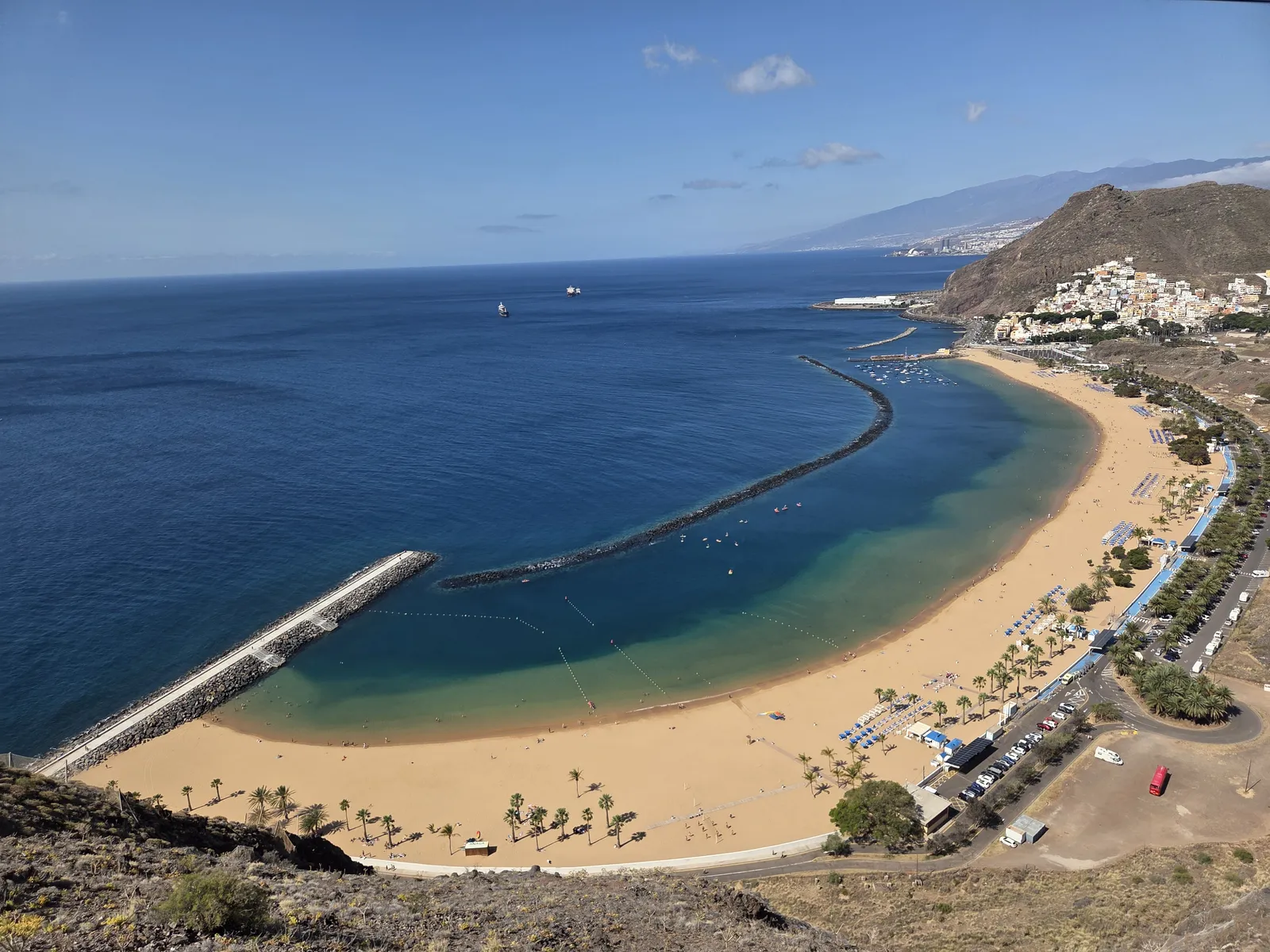
Playa de Las Teresitas lies beside San Andrés, within the municipality of Santa Cruz de Tenerife, on the island’s northeastern coast. It is outside the city centre: arriving in Santa Cruz still leaves a coastal journey to the beach. The setting feels markedly different from the resort waterfronts of southern Tenerife, with steep, dry hills rising directly behind the sand.
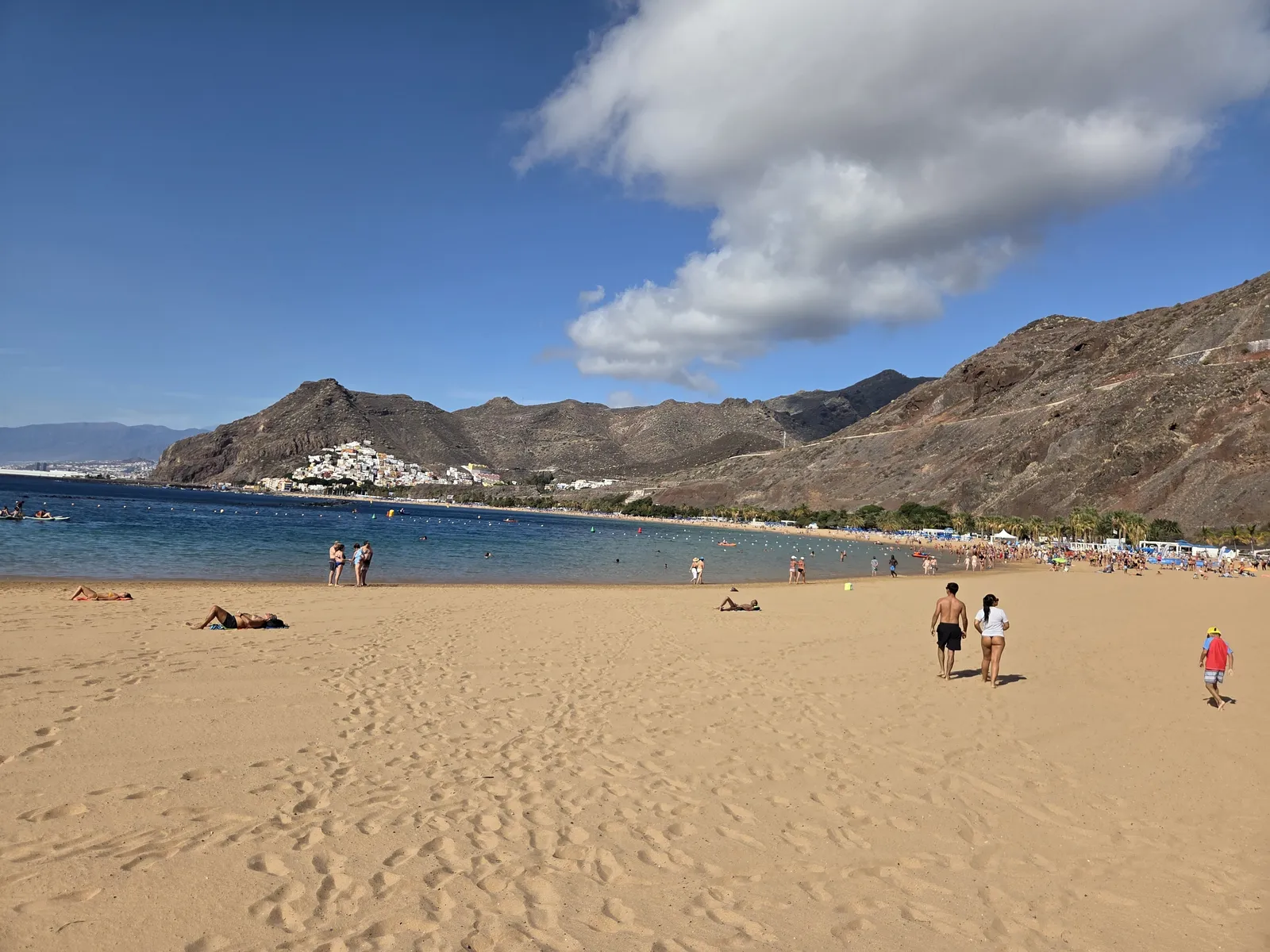
The beach extends for approximately 1.3 kilometres, giving visitors room for both a proper shoreline walk and a comfortable afternoon beside the water. Its pale sand was brought from the Sahara during the beach’s transformation in the 1970s. The result is a distinctive contrast with Tenerife’s many dark volcanic beaches.
Las Teresitas suits visitors who want straightforward swimming, space to spread out and services close by. It also attracts plenty of local residents, particularly at weekends. Choose it for an accessible beach outing rather than solitude or a remote coastal adventure.
Swimming, walking and activities on the water
The offshore breakwater reduces incoming waves, creating a swimming area that is usually more sheltered than the exposed beaches around Anaga. This is the main reason families and less confident swimmers often favour Las Teresitas. Nevertheless, it remains a sea beach: conditions vary, and children need close supervision even when the surface looks calm.
Check the beach flag and any notices before entering, follow lifeguards’ instructions and stay within the designated bathing area. Keep away from boat movements, harbour entrances and the outer side of the breakwater. A sheltered appearance should never override a restriction displayed on the day.
A walk along the water’s edge is worthwhile even without swimming. The length of the bay allows you to leave the busiest entrance behind and choose a spot that suits you. Paddleboarding is another established activity here; ask the local operator about current sessions, suitable conditions and the permitted activity area rather than assuming equipment is always available.
Facilities, beach bars and accessible bathing
There is no beach admission charge. Facilities include toilets, showers, beach bars and sunbed and parasol hire, although individual services have their own operating arrangements. Bring a towel and sun protection if you prefer a simple visit without hiring anything; check displayed prices before ordering drinks or renting equipment.
Numbered entrances help you orient yourself along the beach and provide a useful meeting point for a group. Choose your base with the nearest facilities in mind, particularly with small children. Palm trees provide patches of shade, but their coverage changes through the day and should not replace reliable sun protection.
Las Teresitas also has accessible infrastructure and an assisted bathing service. Visitors who need help entering the water should check the current arrangements through the council’s accessible bathing information before travelling. An accessible entrance does not mean every part of the sandy beach is equally easy to reach, so confirm the appropriate access point and assistance hours for your needs.
Getting to Las Teresitas by bus or car
Bus from Santa Cruz
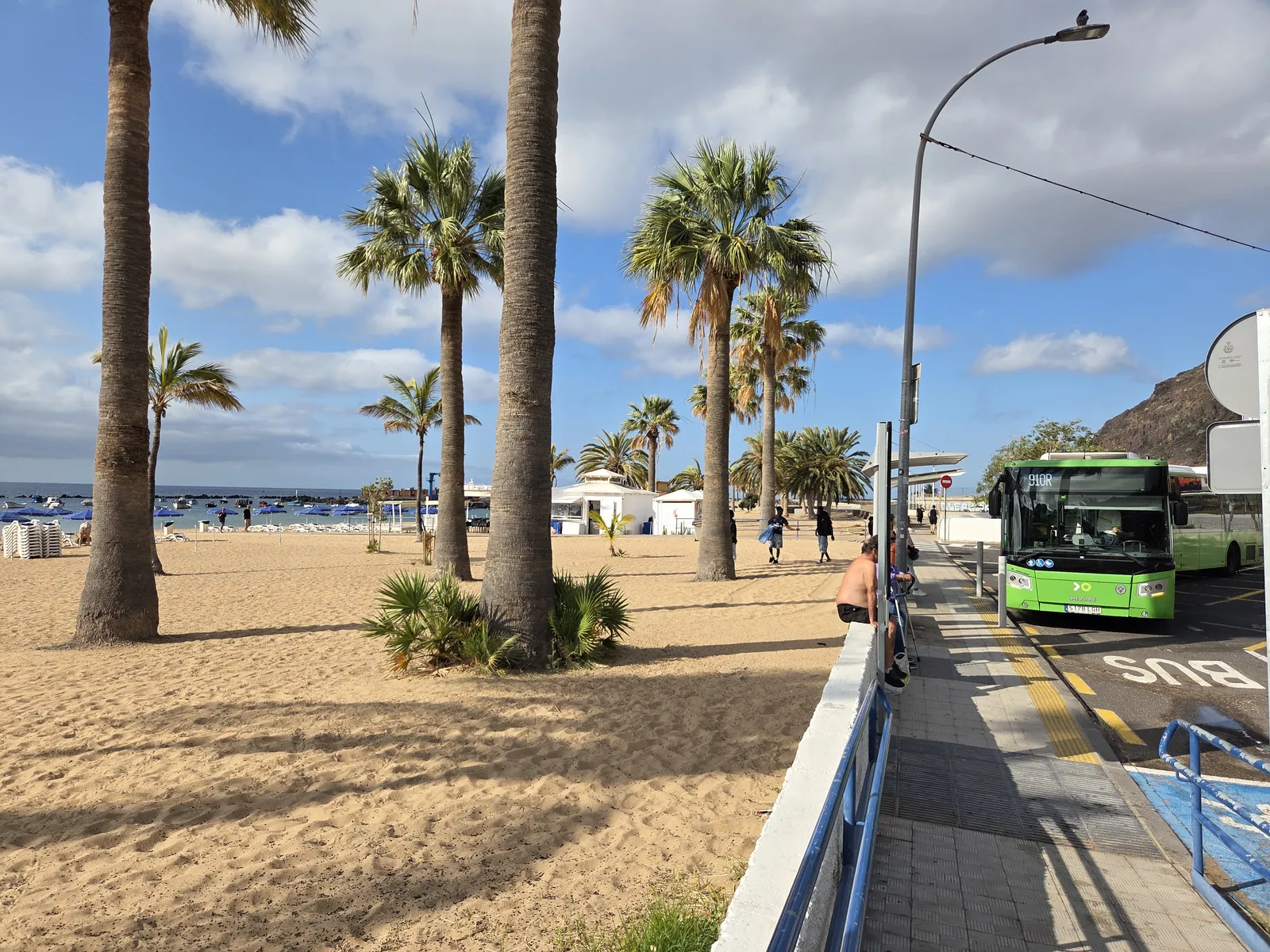
TITSA route 910 connects the Santa Cruz Intercambiador with San Andrés and Las Teresitas, following the coastal corridor through the port districts. It is a convenient option if you are staying in the capital or arriving there on another bus. Check the current route 910 timetable, including the notes identifying return departures from San Andrés.
From elsewhere on the island, plan the connection into Santa Cruz as well as the final beach journey. From the southern resorts, this is a substantial outing; leave enough time for the return rather than treating Las Teresitas as a quick local beach stop.
Driving and parking
From Santa Cruz, follow the coastal road towards San Andrés and then the beach access signs. Parking areas run behind the sand, keeping the walk relatively short. On sunny weekends and holidays, arrive early: both the approach road and parking can become busy. Use marked spaces and keep bus stops, accessible bays and emergency access clear.
San Andrés, the beach viewpoint and nearby places
San Andrés is the most natural addition to a beach visit. Its streets and waterfront sit beside the southern end of the bay, making lunch here easy to combine with a swim. Fish restaurants are a particular draw; compare menus and ask about the price of fish sold by weight before ordering. Allow time for a short village walk rather than returning straight to the car.
The elevated view above the opposite end of Las Teresitas reveals the shape of the beach and breakwater. The road climbing towards Igueste de San Andrés provides the familiar high perspective, but roadside space is limited. Use only lawful stopping places, respect barriers and signs, and avoid walking along bends where there is no safe pedestrian space.
Las Gaviotas, farther along the coast, offers a contrasting black-sand setting, while Anaga’s mountain roads lead into a much larger landscape of villages and walking routes. These deserve their own time. For a relaxed day, San Andrés and the beach are a more realistic combination than adding several distant Anaga stops.
When to visit and how much time to allow
Allow two to three hours for a swim and beach walk, or a half-day with lunch in San Andrés. A weekday morning generally offers an easier start than a busy weekend afternoon. Swimming is possible throughout the year when conditions permit, although winter water feels cooler and sunshine is never guaranteed.
Wind can lift the fine sand even when the water remains relatively sheltered. Check the forecast, bring water and secure lightweight belongings. Before setting out, consult the council’s Las Teresitas beach information for service details and notices, then follow the signs on arrival. For a first visit, keep the plan simple: arrive early, enjoy the bay and finish with an unhurried meal in San Andrés.